
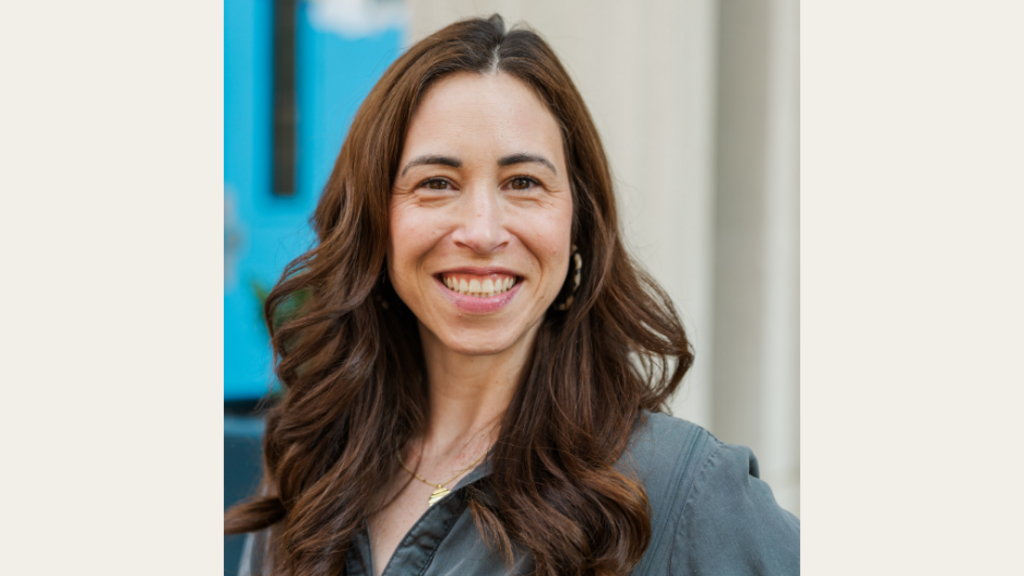
Photo by Photo Courtesy of Kate Sparta-Lutzo
For Kate Sparta-Lutzo, returning to school to pursue a graduate degree in education was never part of the plan. After earning her bachelor of arts in criminal justice with a concentration in forensic science from Temple University in 2009, she envisioned a very different future.
Today, Lutzo is thriving as a special education teacher while completing the online master of education in special education program offered by Temple University’s College of Education and Human Development, a journey she describes as both challenging and deeply rewarding.
“I’m so happy to find something that I love,” Lutzo said. “I did not think that I was going to find a topic or a job that I was going to love so much that I would actually get excited about returning to school.”
Before entering education, Lutzo spent nearly a decade as a stay-at-home mother raising her three children. When her youngest child started preschool, she began working as a student assistant, seeking a role that aligned with her family’s schedule.
That position eventually led Lutzo into substitute teaching, where a single classroom assignment unexpectedly changed the course of her career.
“My very first day substituting, I was placed in an autistic support classroom,” Lutzo said. “I just fell in love with the kiddos.”
Now at George W. Nebinger School, Lutzo found herself increasingly drawn to special education.
“The more time I spent supporting students and collaborating with staff, the more I realized I wanted to pursue the field,” she shared.
After building strong relationships within the school community, she approached her principal about becoming a special education teacher.
“Her response was, ‘What took you so long?’” Lutzo recalled.
Encouraged by that support, Lutzo began her first year as a full-time special education teacher under an emergency certification. At the same time, she made another life-changing decision: returning to Temple to earn her graduate degree.
As a working teacher and mother of three, flexibility was essential when evaluating programs. One of the biggest factors in her decision was Temple’s ability to allow her to complete fieldwork and student teaching within her own classroom.
Lutzo says the coursework has already had a direct impact on her teaching practice.
She highlighted assignments such as case studies and research-based projects that connected immediately to the needs of her students.
“It was teaching me in real time how to support my students,” Lutzo said. “I feel so much more confident supporting them.”
The program has introduced her to evidence-based practices, special education law, classroom strategies and collaboration techniques that she now applies every day.
As both a parent and educator, Lutzo understands the importance of advocacy and building strong relationships with families. She said the program’s emphasis on communication and collaboration has helped prepare her for the many responsibilities special educators take on beyond classroom instruction.
“There are a lot of meetings, a lot of collaboration and a lot of working with parents,” Lutzo said. “The graduate classes really helped with how to connect with families and support students in meaningful ways.”
Her own experiences navigating educational systems on behalf of her children have also shaped her philosophy as a teacher.
“I always had to advocate for my own children,” she said. “I did not want to be the teacher that wasn’t doing that for their students.”
Working in an autistic support classroom has taught Lutzo that success often comes through small but meaningful milestones.
“I have students who are working on milestones like eating with a fork or engaging with a video for five minutes,” she said. “When those kids hit those milestones, it is just so rewarding.”
For Lutzo, helping students develop functional and life-changing skills is what makes the profession so fulfilling.
“You’re not just teaching reading or math,” she said. “You’re really making a huge difference in their life.”
Although she chose Temple’s online program for its flexibility, Lutzo said one unexpected benefit has been the sense of community she has found among classmates and faculty.
“While I initially wondered how connected I would feel in a virtual environment, I’ve been pleasantly surprised by the relationships I’ve built with classmates and faculty,” she shared. “There are a lot more opportunities to connect than I expected.”
Looking back, Lutzo never imagined that a substitute teaching assignment would lead her back to Temple and into a career she loves.
“Temple helped me put all the pieces together,” Lutzo said. “It gave me the tools to support my students, the confidence to trust myself as an educator and the reassurance that I’m exactly where I’m supposed to be.”
For Lutzo, the journey back to Temple was more than a return to the classroom. It was the path to discovering a profession where she can make a meaningful difference in the lives of her students every day.