
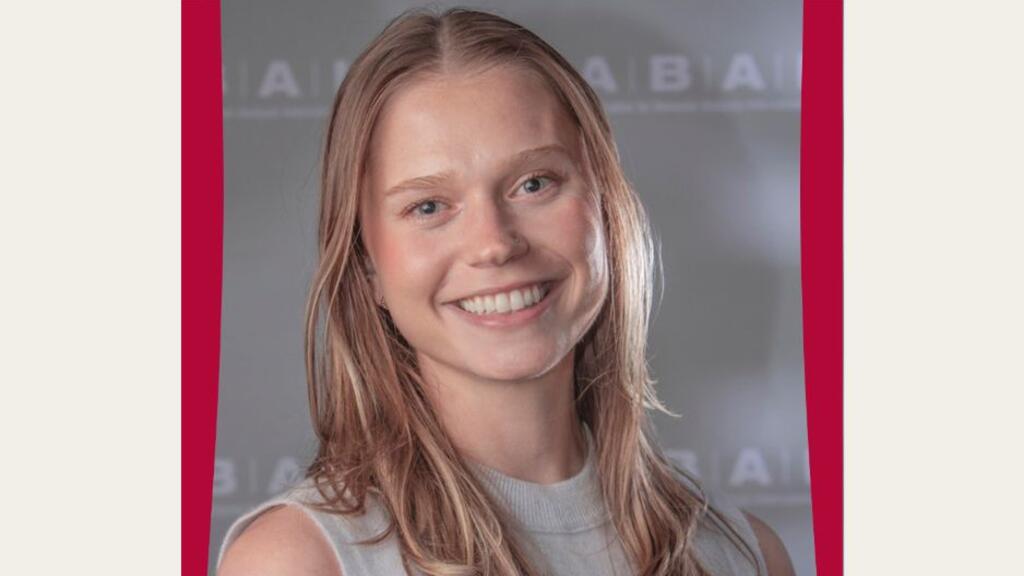
Photo courtesy of Tess Fruchtman
Rigorous coursework, research engagements and clinical training are common expectations for students pursuing doctoral degrees. As Temple University College of Education and Human Development’s Tess Fruchtman points out, some of the most valuable lessons become obvious only once you are immersed in the journey.
For her, that lesson is learning to listen.
Fruchtman, an education PhD student with a concentration in special education, earned a fellowship in the Children’s Hospital of Philadelphia (CHOP) Leadership Education in Neurodevelopmental and Related Disabilities (LEND) program. The fellowship presented an opportunity to learn alongside professionals with varied perspectives.
“LEND brings professionals from different fields together to learn from each other and help improve the lives of our future clients,” she explained.
Collaborating with professionals from medicine, psychology, occupational therapy, speech-language pathology, family advocacy and other disciplines broadened the way Fruchtman approached supporting children and families. Instead of viewing challenges through a single lens, she began to appreciate how every profession and every family contributes a valuable perspective.
“The LEND fellowship taught me how important it is to listen to advocates, family members and professionals from other disciplines,” Fruchtman said. “Through listening and collaboration, we are able to truly provide the best support to children and their families by incorporating different viewpoints into our treatment plans and goals.”
As part of LEND’s community engagement component, Fruchtman visited Spectrum Success 911, a nonprofit organization based in Pennsylvania, and spent the day with the AUSOME Ambassadors program, an initiative designed to empower young adults on the autism spectrum, promoting independence. There, she was welcomed into a community intentionally built around authenticity, acceptance and belonging.
Experiences like these reshaped how Fruchtman thinks about leadership. While clinicians bring professional expertise, she believes families and self-advocates bring something equally important—their lived experience.
“Advocates are leaders,” she said. “Despite being the professionals, it is the child and family who knows what is best for them.”
Her experiences at CHOP have led to Fruchtman’s growing interest in working within hospital settings, where behavior analysts and special educators can play a larger role in supporting children with neurodevelopmental disabilities.
“Even the best hospitals have limited behavioral support available for children who are hospitalized,” she explained. “This is unfortunately when we see things like restraint utilized because nobody is available to assess and create a plan for the challenging behavior presenting. This is where behavior analysts and special educators could be vital.”
After graduation, she hopes to continue making an impact through teaching, research and community partnerships while helping shape future behavior analysts.
Looking back, she said she is most proud of the community she found along the way—at Temple and through her fellowship.
“The Temple community is so supportive and I am proud of how we show up for each other,” she noted.
“I couldn't recommend the LEND fellowship more,” she added. “Be open-minded. You are going to hear from a lot of different professionals, and you may not agree with everything said. However, it is important to listen to one another and learn how to work together and hear each other out.”
“Listening and learning from our patients,” she emphasized, "is how we make a positive impact on children with neurodevelopmental disabilities and their families while also making ourselves better clinicians.”
As Fruchtman prepares for the next chapter of her career, she hopes to carry the lessons of collaboration and advocacy into every setting. More than anything, she hopes future professionals remember that the best care begins by listening.