
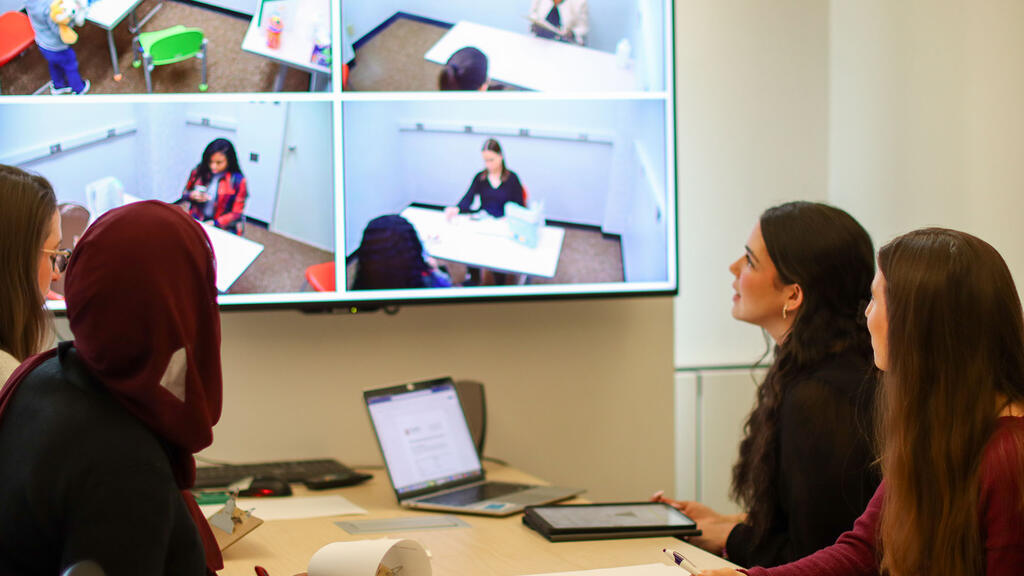
For four decades, the Psychoeducational Clinic at Temple University’s College of Education and Human Development (CEHD) has stood as a steadfast community resource providing comprehensive, low-cost evaluations for children and adolescents between ages five and 17 experiencing varieties of learning difficulties at school. Today, under the leadership of Shana Levi-Nielsen, a CEHD faculty member who first worked in the clinic as a doctoral student ten years ago, the clinic is evolving from a traditional diagnostic center into an integrated hub of evidence-based services aiming to address broader community mental health needs in Philadelphia.
“School psychologists have always been evaluators, but now that we're getting into a place in time where our schools really need a lot of mental health support, we want to be able to provide that,” said Levi-Nielsen.
Historically, families turned to the clinic primarily for comprehensive psychoeducational evaluations to identify underlying learning challenges in reading, writing or mathematics.
In the greater Philadelphia area, families seeking autism evaluations can face hospital waitlists of one to two years, potentially delaying access to early intervention, says Levi-Nielsen. In response to these growing needs, the clinic has expanded its services to address children’s social-emotional concerns, including Attention-Deficit/Hyperactivity Disorder (ADHD), anxiety and depression, and offers autism evaluations for children as young as two, or 18 months for high-concern referrals. Recently, the clinic has started “maintaining a waitlist of adults who are interested in our services for ADHD and autism diagnosis,” says Levi-Nielsen.
Levi-Nielsen understands that while these evaluations mean a lot to families, identifying a challenge is only half the battle. There is a severe shortage of specialized local providers, prompting the clinic to make a strategic operational shift. Levi-Nielsen says when she realized she had nowhere to refer the clinic’s clients for services after diagnosis, she concluded that the clinic needed to begin providing intervention services.
Today, Psychoeducational Clinic operations include targeted academic interventions that provide highly specialized, individualized instruction to accelerate children’s learning. The clinic also offers evidence-based therapeutic treatments such as Cognitive Behavioral Therapy (CBT) and is expanding its services to integrate counseling psychology and Applied Behavior Analysis (ABA).
“If it's a learning problem, we can help with that. If it's a developmental concern, we can help with that, too,” Levi-Nielsen shares.
Recently, the clinic has partnered with Pyramid Educational Consultants to host an innovative after-school communication skills program for young children. Levi-Nielsen explains the program operates a play-based group twice a week focused on communication skills to support young children who are not meeting their communication milestones. She notes that the Picture Exchange Communication System (PECS), created by Pyramid Educational Consultants founders Andy Bondy and Lori Frost, helps facilitate children’s communication skills before developmental frustration escalates into behavioral challenges.
“We are very actively recruiting children for that program,” says Levi-Nielsen. “The children who come to that program do not get the support that we're offering anywhere else. It will absolutely change their life.”
Beyond clinical services, the Psychoeducational Clinic is also beginning to offer family support sessions. Levi-Nielsen explained she recognizes that parents often feel overwhelmed when managing their children's behavioral challenges. According to Levi-Nielsen, this service is open to any parents having behavior problems with their child at home. “They can come to get expert support for how they can best support their child at home and how they can advocate for their child in school,” she says.
Families can book ongoing, one-hour weekly coaching sessions to learn evidence-based home strategies and positive behavior management. “The clinic becoming a place that families can come to as a resource to help support them through issues is a level of care I'm really, really excited about,” notes Levi-Nielsen.
Temple's Psychoeducational Clinic delivers high-quality care on a sliding-scale fee structure adjusted for household size and income. Clients receive thorough, highly detailed evaluations by student clinicians participating in the unique student clinical training model and supervised by research faculty who specialize in cutting-edge and evidence-based practices.
“I'm really proud of the level of impact we have through the clinic,” says Levi-Nielsen. “The Pyramid program is really an excellent example of how we are able to help more people in the community.”
To learn more about the Psychoeducational Clinic at Temple University and how it serves as a vital pillar of health, access and equity in the region, visit the clinic's website.